

‘Long ribbon pole dance’
Author Emma Kathryn finds her joy and tells us about it

Dear readers,
Another bank holiday looms on the horizon.
The sun is shining.
Life is… good?
I know this comment might well get me killed - we are not allowed to find any silver linings in modern Britain - but I am feeling daring.
That’s what I love about this week’s piece; it’s all about throwing caution to the winds and finding joy. In that sense, I think we could all do with taking a leaf out of author Emma Kathryn’s book.
Read on for inspo.
Nina-Sophia Miralles, editorial director x
‘For The Joy Of It’: Author & Witch Emma Kathryn On Ritual Dance
Words by Emma Kathryn
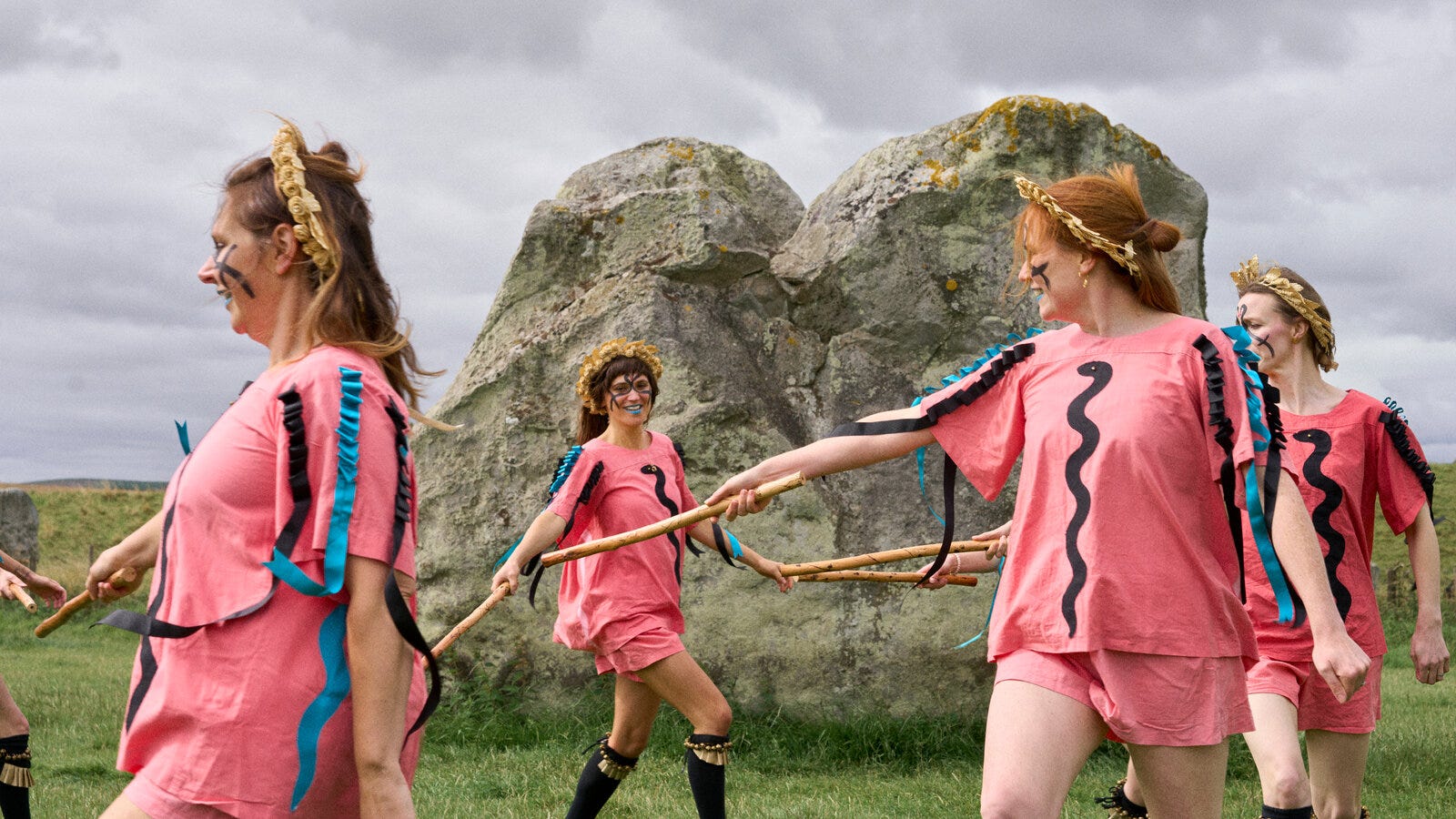
It’s just past first light when I drag myself from the warmth of my bed and my still-slumbering husband. The sun won’t rise for another hour, but I’m already excited. May Day is here.
A quick shower washes away the last vestiges of sleep, and I get dressed all in white: white blouse, white jeans, white fleece gilet, and even white socks. The only exceptions are the blue and green ribbons holding back my curls. My kit’s already in the car, so I leave the house quietly and begin driving.
My destination: Castle Hill, tucked away in the Nottinghamshire countryside. As I pull up by the entrance to a farm, others are already starting to head up a beaten track. I grab my bag, bells jingling softly inside, and follow, hoping the cows aren’t out in the field yet. As I make my way toward the earthworks where Laxton Castle once stood, I shiver in anticipation.
I find my side, or dancing team, already gathered in the field. Slipping into my baldric, blue and green to match my ribbons, I strap my bells to my legs just below the knee while musicians begin warming up their instruments and their chilly hands.
The sun is close to rising.
We get into formation as the melodeon player starts with gusto, and the cry of ‘This time’ goes up. Then we are dancing, white hankies twirling, bells jingling. I can’t help but smile as the sun spills its light across this beautiful place.
This is what it means to dance the sun up on Beltane morning, May Day.
The first time I took part in this event was 2025, but this centuries-old tradition thrives across Britain. There are around 800 morris sides in the UK, and wherever you have morris dancers, there you are bound to find a May Day dance bringing in the brighter half of the year, a herald of the warmer months and a sure sign that summer is near.
I’m a morris dancer, but I don’t fit the mould of a stereotypical morris man—for starters, I’m a woman. You’d be excused for questioning what drew a mixed-race, council-estate-born-and-bred woman in her early forties to morris dancing. The simple answer is: for the joy of it!
My infatuation began with watching Boss Morris, the (increasingly famous) female morris collective, performing at the Neo Ancients Subculture festival back in 2024. As they danced, I swore to my husband that when we got back home, I would find a side and become a morris dancer. I have been hooked since; folk dance has a way of doing that to a person!
Morris dancing is linked to the land, with distinctive dance styles and sides named after specific places, such as Cotswold and Border morris. Hankies and sticks are flourished elaborately in time with music, and bells add an air of whimsy. Though its full origins are lost to time, it was first mentioned as a 15th-century court dance. Some say it’s named for the Spanish Moors, while others argue it is a pagan tradition. As a practising witch, I’d love to believe that, and it makes logical sense, as spiritual practices worldwide often employ dancing for ritual purposes. In Haitian Vodou, the lwa (spirits who bridge the gap between humanity and the supreme creator God) are invoked by dancing. In Jamaica, Kumina is a sacred tradition that includes the use of ritual drumming and dancing as a way to connect with the ancestors. Do these forms of spiritual dance also bring joy? If I were a betting woman, I’d wager they do indeed.
It’s not just spiritual dancing that delights people across cultures. Linett Kamala, the first female DJ to perform on a soundsystem at Notting Hill Carnival, is garnering recognition for her involvement with folk dance. When she visited Jamaica in 2020 to work with a school as part of her charity outreach, she was startled to find that they had a maypole.
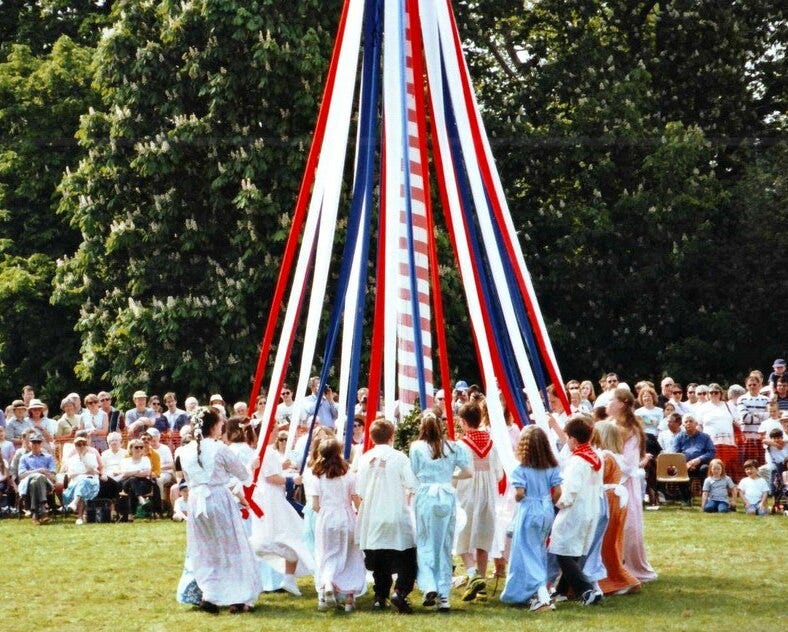
The history of maypole dancing in Jamaica is bound up with the influence of British colonialism, but this tradition evolved beyond its imperial origins. Sometimes called the ‘long ribbon pole dance’, Jamaican maypole dancing is often performed to mente music, a precursor to the reggae genre, by dancers wearing quadrille-style dresses, a fusion of British and African traditions.
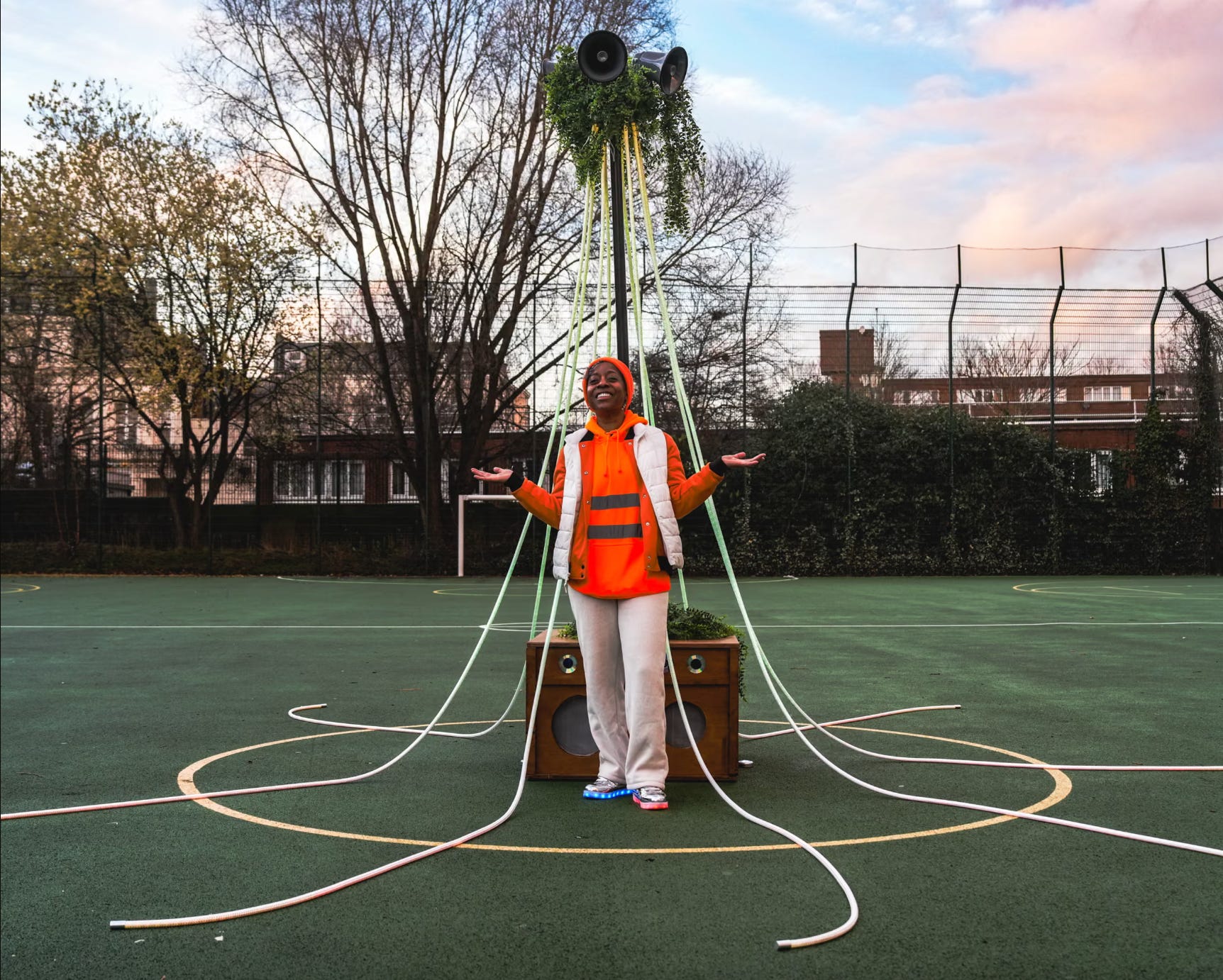
Inspired by this experience, Kamala’s Basstone Maypole Project is an ambitious fusion of past and present. It combines maypole dancing with LED ‘ribbons’ and dancehall music, bringing countercultural flair to a traditional activity. When I ask if she dances for joy, she tells me, ‘100%, it makes me joyful! Dance is so beneficial: it makes people smile and laugh, allows us to move our bodies with others and brings together different aspects of humanity.’
It may seem paradoxical to invent new traditions, but that’s exactly what has been taking place in the folk revival as people find new ways of engaging with their past. Morris dancing has proved particularly fertile ground for innovation, and is at the forefront of this movement.
Consider renowned folklorist Lucy Wright’s dancing down of the sun. Each year at Samhain - the festival associated with Halloween that inaugurates the darker half of the year - she calls people across social media to join her with their own dance. ‘It wasn’t a calculated thing,’ she says. Soon after the pandemic, far from home and without a morris side to join on a May morning, she wanted to dance. So she headed out to the hotel carpark armed with her rag jacket and danced the sun up. This renegade way of engaging with her practice stirred something in her. That’s how Dusking was born, a counterpart to the May day tradition of dancing the sun up.
Naturally, Wright dances for joy. ‘Sometimes it’s joyful after the event, even if it was exhilarating during it,’ she says. ‘Sometimes the joy comes when you no longer have to think about the doing.’
Perhaps that’s how it felt for the first dancers who donned costumes on a chilly May morning, entirely unaware that we’d be doing the same thing centuries later. Whatever the style or tradition, moving to music connects us with our bodies and land and each other. The joyous thrill of shared humanity makes all this effort worth it—and if you try it, that thrill might just get you out of bed before the break of dawn.